


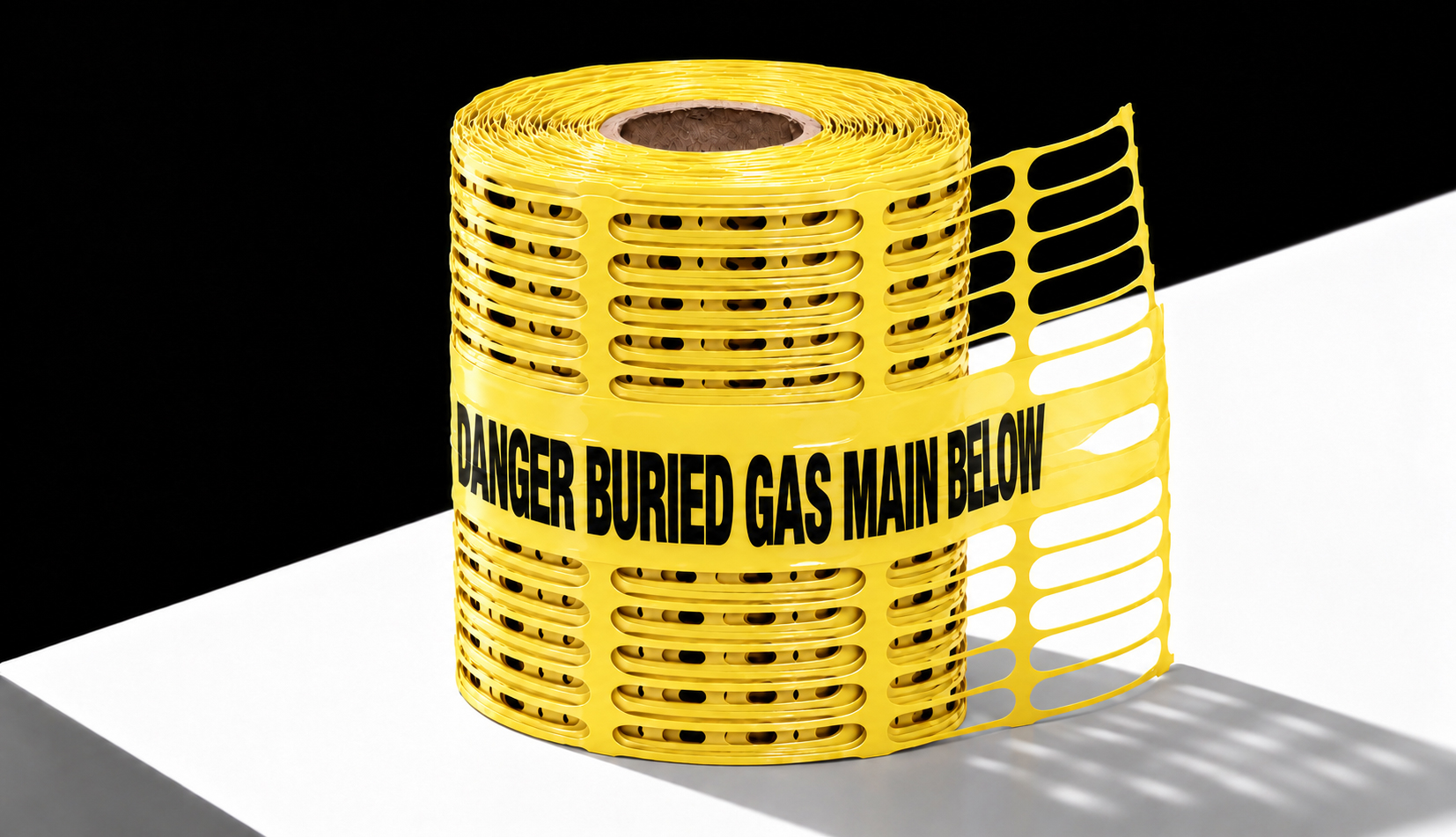

Choose by warning message and colour
Match the gas warning to the asset owner’s required wording and colour. Put the product code on the schedule.
A strong warning above the gas line.
The Gas main is buried. The warning’s waiting. Tapex® FairWarning mesh leaves a printed gas warning above the pipeline for the next crew to uncover. Its semi-rigid, rot-resistant construction suits time underground. Match the wording and colour to the asset owner’s specification.
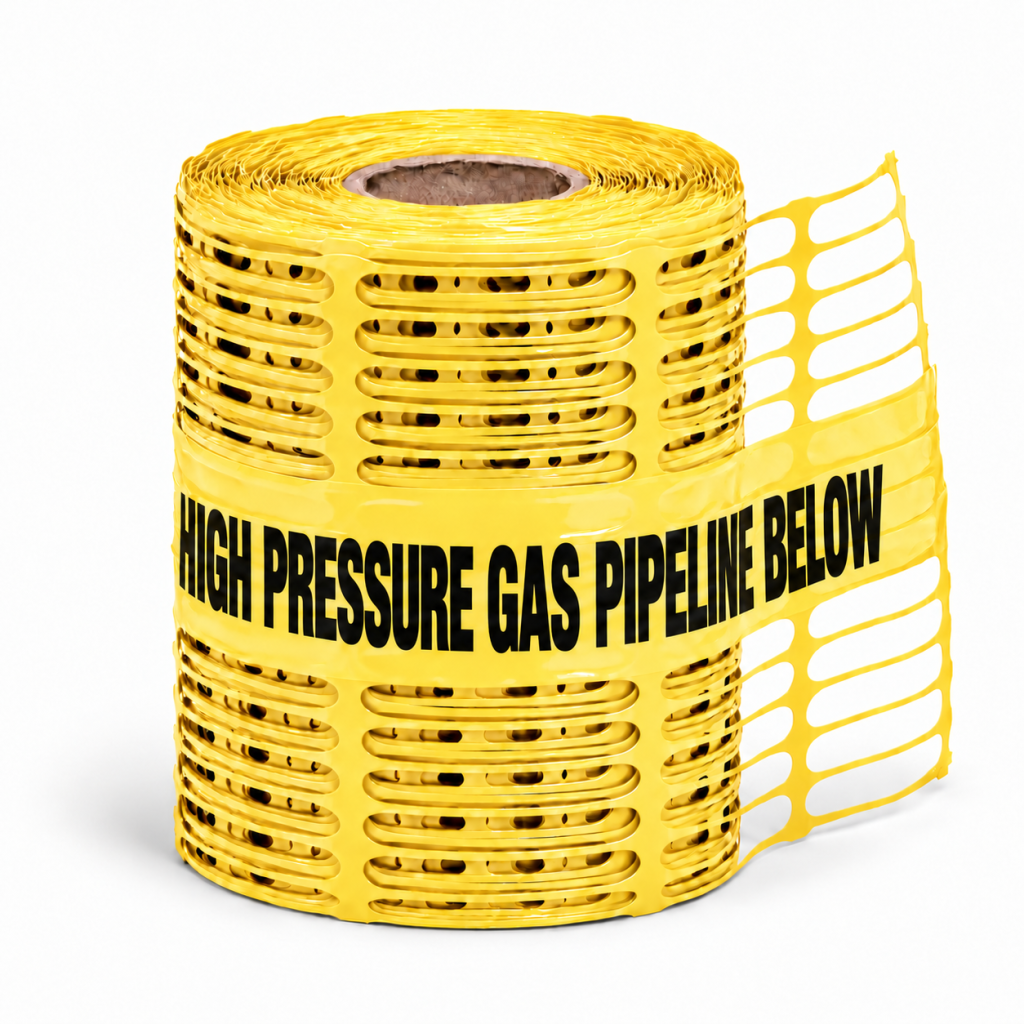
Rot-resistant warning mesh for buried high pressure gas pipelines.
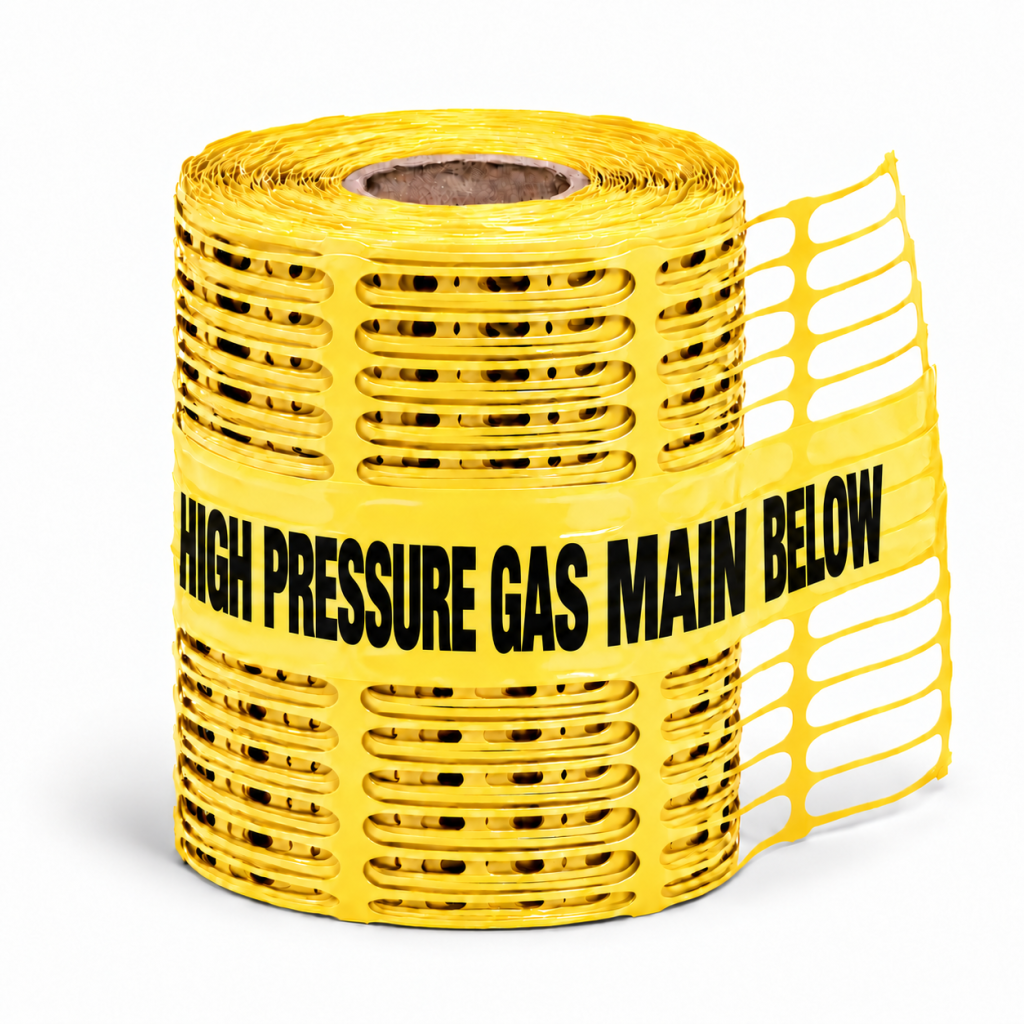
Rot-resistant warning mesh for buried high pressure gas mains.
Match the gas warning to the asset owner’s required wording and colour. Put the product code on the schedule.

This mesh provides a visible warning during excavation. Specify the means of locating the pipe before the dig as a separate requirement.

Check the mesh material and soil tolerance against the site conditions. A buried warning needs staying power.