

Monitor critical infrastructure with
Distributed Fiber Optic Sensing
AP Sensing turns fibre optic cable into a sensor along your asset. Offered through Tapex Industrial’s Dig Safe® range, it helps engineers and asset owners detect change, locate trouble and bring warnings into the control room. From buried cables to offshore pipelines: protect, detect, warn and monitor.
- Detect temperature, vibration, and strain changes in asset condition.
- Monitor buried, submerged and hard-to-reach assets remotely.
- Engineered and made in Germany.
AP Sensing uses fibre optic cable to detect and locate heat, vibration and strain along cables, pipelines and structures.
Add current sensing where electrical condition matters. Point sensors watch selected spots. Distributed sensing follows the fibre, helping operators find trouble between them. Suitable existing fibre can become the sensor, bringing buried or submerged routes into view.
From fibre selection to commissioning and training, AP Sensing helps build the monitoring around your asset, the changes you need to detect and the action an alarm should trigger.



Built for the long run. Proven on the ground.
AP Sensing has completed more than 1,000 projects in over 70 countries—listening for trouble, tracking temperature and detecting fire.

Acoustic monitoring up to 2x
100km
Simultaneous sensing

Temperature monitoring up to
70km

Fire detection up to
16km
Per channel
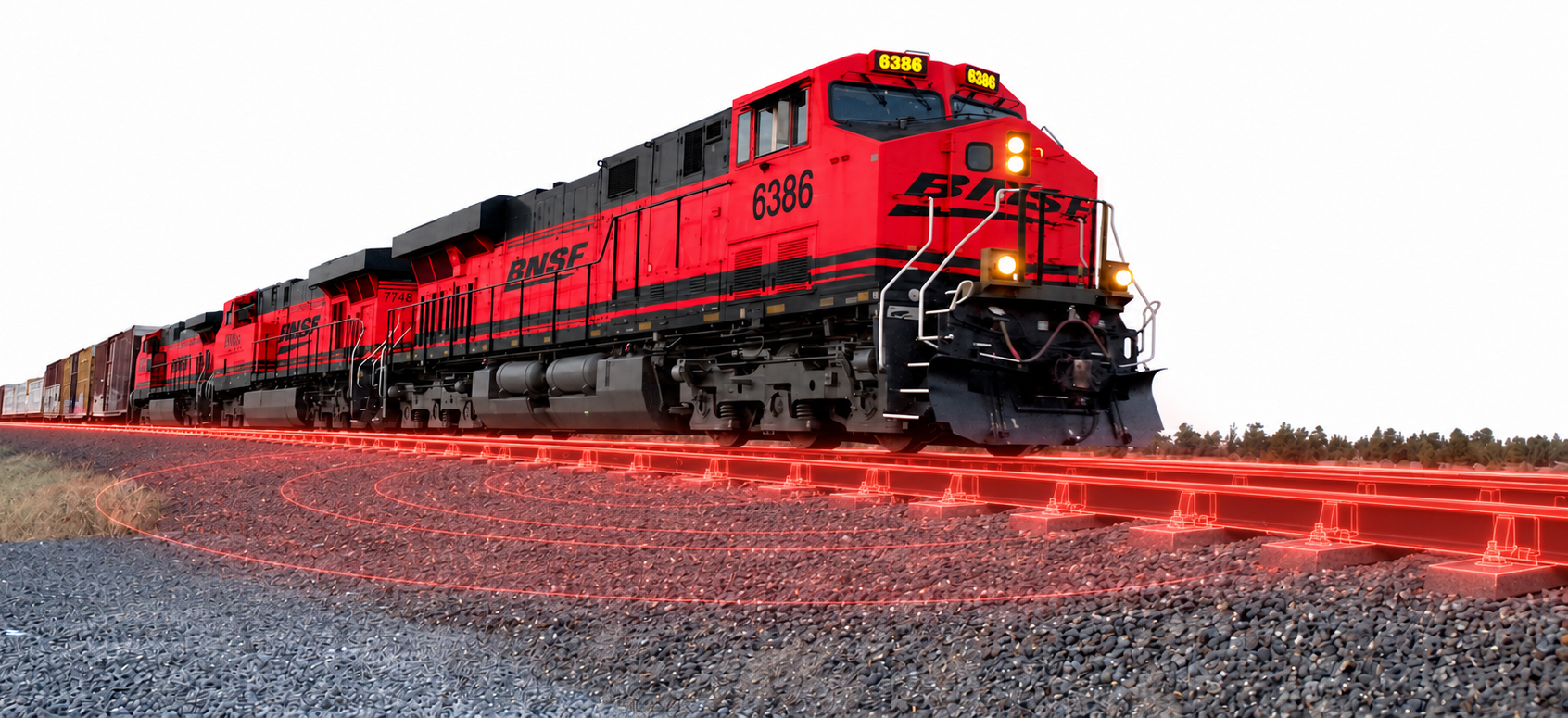
fibre optic sensing
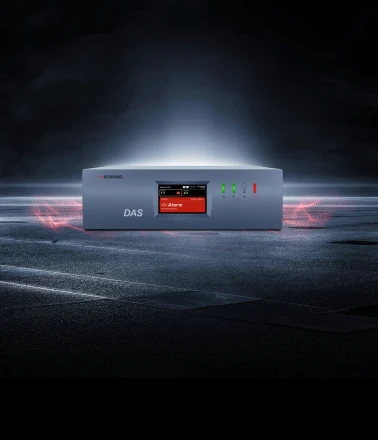
Distributed Acoustic Sensing (DAS)
Fibre optic vibration sensing for activity along your asset.
- Continuous sensing along the monitored fibre
- Detects vibration and changes in strain
- Supports excavation and intrusion monitoring
- Existing fibre assessed for suitability
- Event information for a targeted response
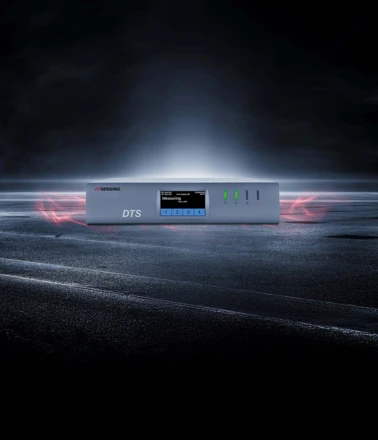
Distributed Temperature Sensing (DTS)
Temperature sensing along the fibre, from end to end.
- Continuous temperature profiles
- Locates hot and cold sections
- Raman and Brillouin options
- Passive optical sensing along the route
- Data for alarms and thermal analysis
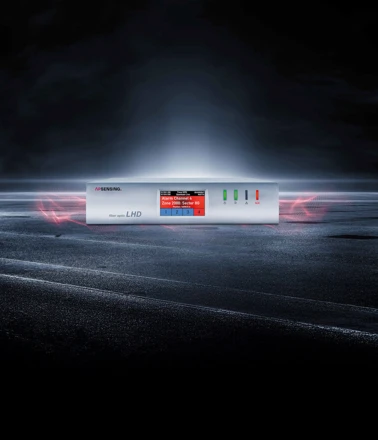
Linear Heat Detection (LHD)
Continuous heat detection for long and demanding spaces.
- Temperature measurement along the cable
- Flexible alarm zones
- Hot-spot and fire-location information
- Passive optical sensing element
- Interfaces to fire and monitoring systems
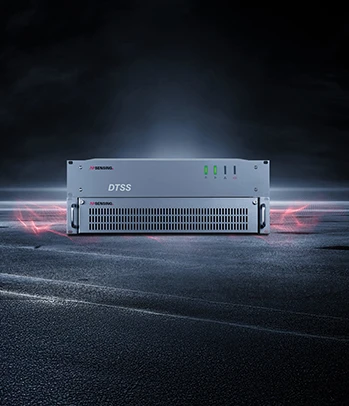
Temperature & Strain Sensing (DTSS)
Fibre optic sensing for temperature and mechanical strain.
- Distributed temperature or strain profiles
- Brillouin-based optical measurement
- Localises changes along the fibre
- Cable coupling matched to the task
- Complements acoustic monitoring
Software
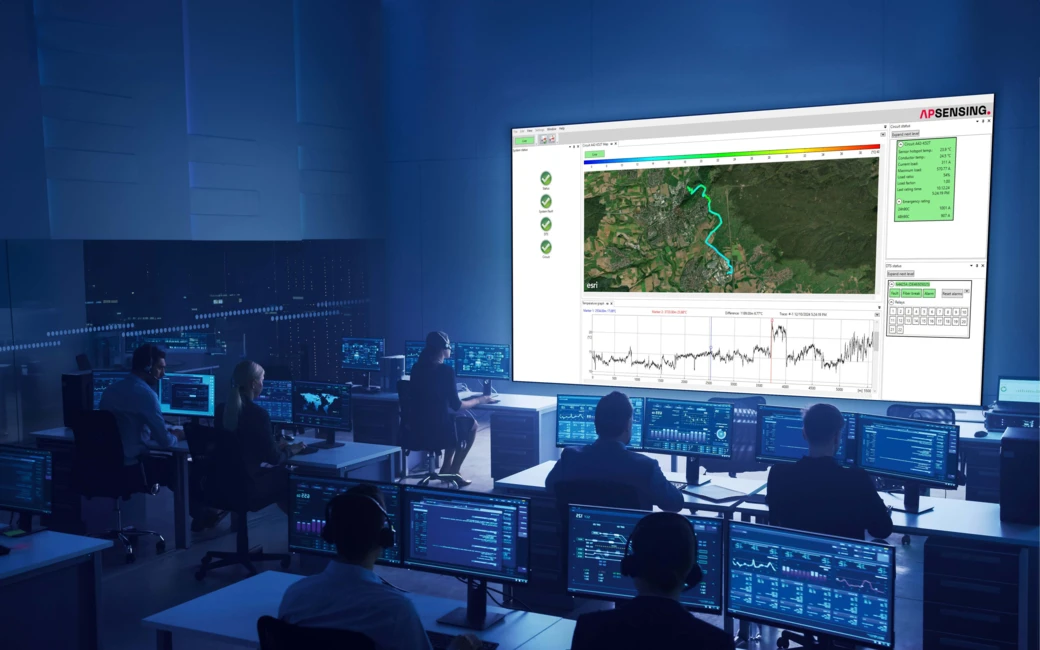
SmartVision Software
See asset readings, alarms and history in one place.
- See sensor readings in one asset view.
- Locate alarms along the monitored route.
- Review past readings to track changing conditions.
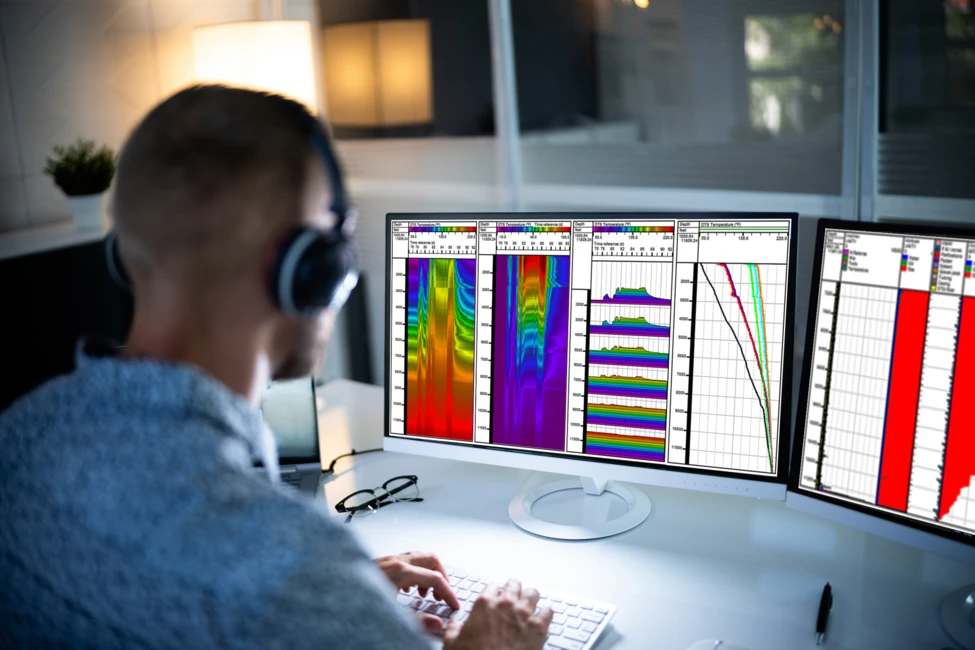
PLATO-DTS
Use well temperature readings to understand fluid flow.
- Turn well temperature readings into flow profiles.
- Model production and injection along the well.
- Track well changes with reports over time.
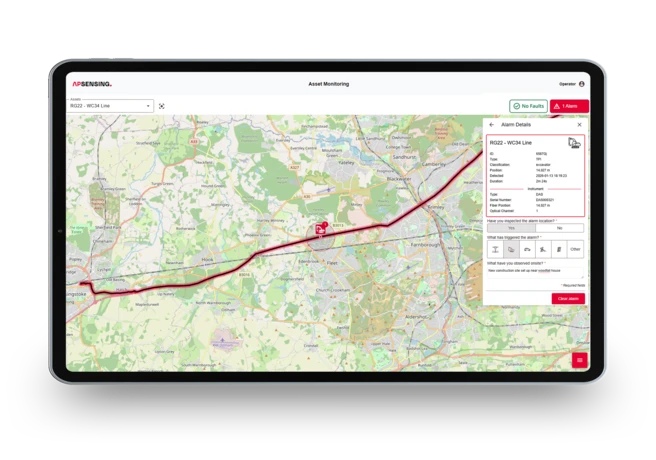
AI Intrusion Detection Engine
Identify and locate digging, drilling and other intrusions.
- Detect and locate digging, drilling and fence tampering.
- Classify multiple activities at the same time.
- Reduce nuisance alarms with machine learning.
Questions?
Answered.
Fibre optic sensing uses light in a glass fibre to measure changes such as heat, vibration or strain.
An instrument sends light through the fibre and reads the light that returns. AP Sensing’s distributed sensing systems use those readings to show where conditions change along the monitored route. The technology selected determines what the system measures
Distributed fibre optic sensing monitors along a fibre, while point sensors measure at selected spots.
That makes distributed sensing useful for long cables, pipelines and rail routes, where trouble may start between fixed sensors. Point sensors can still suit individual locations. The right choice depends on what you need to measure and where you need coverage.
Some existing fibre optic cables can be used for AP Sensing monitoring, but their suitability needs checking.
Standard single-mode fibre often suits Distributed Acoustic Sensing (DAS). Other measurements may need a purpose-built sensor cable. Fibre type, condition and position matter: the cable must pick up the heat, vibration or strain you want to detect.
No. AP Sensing uses different technologies to measure different changes in an asset.
Distributed Acoustic Sensing (DAS) measures vibration; Distributed Temperature Sensing (DTS) measures temperature; and Distributed Temperature & Strain Sensing (DTSS) supports temperature and strain measurements. Linear Heat Detection (LHD) detects fire-related heat. Start with the problem you need to find, then choose the sensing technology—or combination—to suit.
No. AP Sensing monitoring and Dig Safe® protection products perform different jobs.
Sensing helps detect and locate changing conditions. Dig Safe® plates provide physical protection, while warning tapes and markers help crews recognise buried services. A monitoring alarm does not place a barrier between a digging tool and a pipe. Choose the layers for the risks around your asset.
Normal activity can cause unwanted alarms, so detection rules need to suit the site.
AP Sensing’s AI Intrusion Detection Engine helps classify vibration patterns, including digging, walking and fence tampering. It is designed to reduce nuisance alarms, not guarantee that none occur. Agree which events matter, then test detection and alarm settings under representative site conditions.
Yes. AP Sensing’s SmartVision software supports links to existing control and monitoring systems.
SmartVision brings sensor readings, asset views, alarms and historical data together. Supported interfaces include Modbus TCP, IEC 60870-5-104 and IEC 61850. Confirm compatibility, security requirements and the information operators need before specifying the connection.
Yes. AP Sensing offers system design, project engineering, commissioning support and training.
Its services cover fibre selection, networking, system integration and acceptance testing. Start your enquiry with the asset, its location and the changes you need to detect. Agree who supplies, installs, tests and supports each part of the system within the project scope.
Get in touch
Tell us what you need to monitor. We’ll help you find the right sensing approach.